

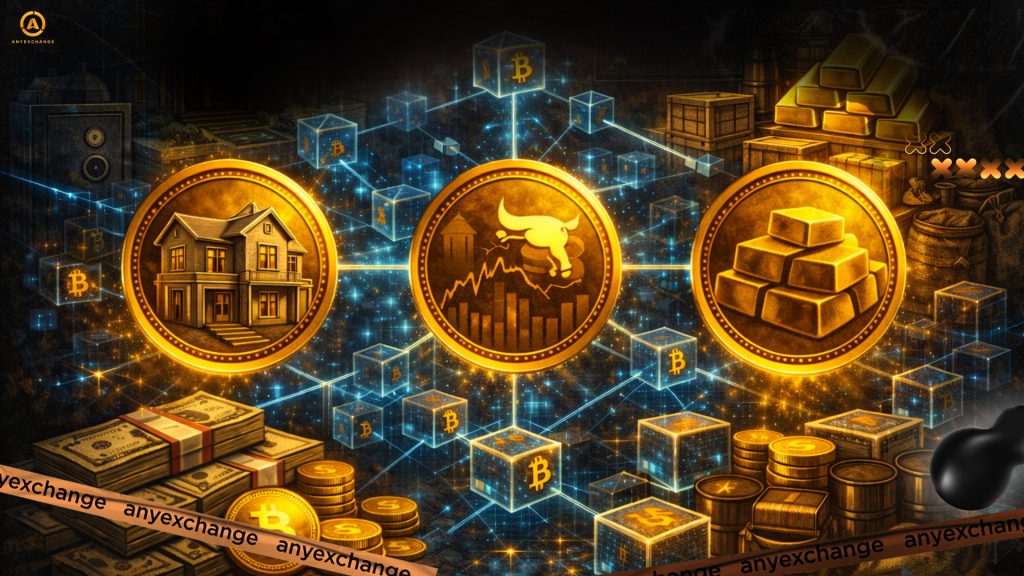
By 2025, tokenization of real assets on the blockchain will have evolved from an experiment into a fully-fledged industry, transforming the traditional logic of the financial market. Real estate, gold, and stocks previously existed only in the analog world, requiring complex buying and selling procedures. Today, they can be represented as digital tokens accessible to any investor with a wallet and internet access.
Financial giants such as BlackRock, HSBC, and Franklin Templeton are successfully implementing asset tokenization, issuing securities and bonds as tokens on public and private blockchains. Startups in Dubai, London, and Singapore are offering investors shares in luxury real estate starting at $100—not through brokers and paperwork, but through tokenization.
Against this backdrop, the global tokenized asset market is growing at record rates. According to the Boston Consulting Group, this market segment could reach tens of trillions of dollars by 2030.
What is asset tokenization?
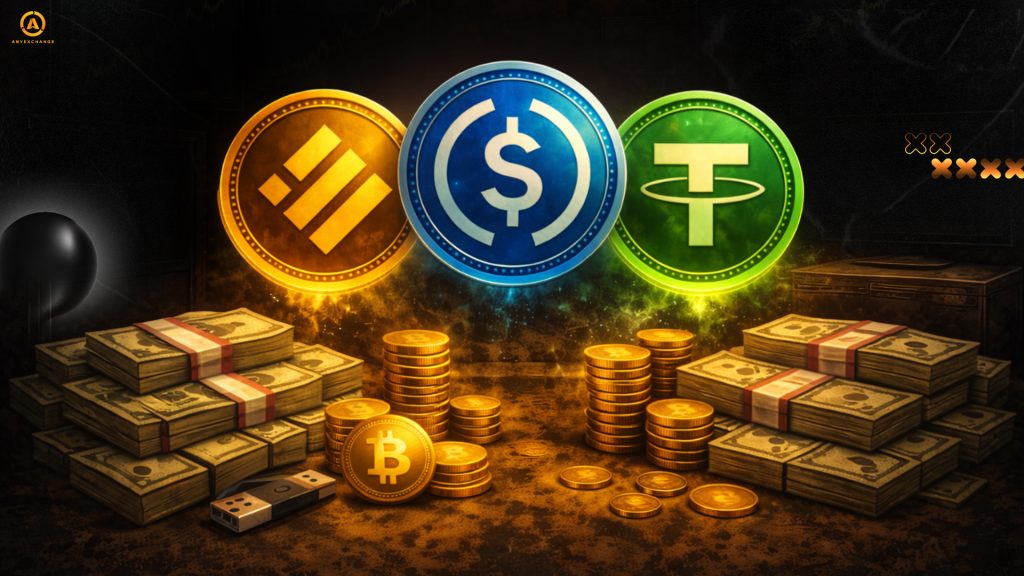
It’s the process of converting physical or financial assets (such as securities, real estate, gold, or art) into digital tokens recorded on a blockchain. Each token represents a share of ownership or participation in a specific asset.
Blockchain is ideal for this purpose. Thanks to its transparent and immutable records, blockchain provides a secure ledger where every transaction is confirmed by a network of nodes and cannot be counterfeited. This solves the problem of trust between participants, enabling transactions to be conducted directly without intermediaries using smart contracts. Furthermore, blockchain paves the way for transaction automation, instant settlements, and reduced costs, making investments through asset tokenization more accessible and secure.
It’s important to distinguish between tokenization and digital assets. A digital asset exists primarily in digital form (e.g., cryptocurrency or NFTs). Tokenization, on the other hand, converts a physical asset, such as a plot of land, company shares, or a gold bar, into a digital asset, providing a link between the physical object and its digital representation. In other words, the token doesn’t rеplace the asset; rather, it serves as its digital twin — easily transferable, divisible, and tradeable.
Real Estate Tokenization
The real estate market was one of the first to experience the practical benefits of blockchain technology. By 2025, examples of real estate tokenization could be found around the world.
- RealT (USA), for example, sells shares of houses in Detroit and Chicago for Ethereum and Base tokens. Investors receive a proportional share of the rental income in USDC.
- In the UAE, Virtua Capital launched a project to tokenize luxury apartments in Dubai; each token represents one square meter of real estate.
- In Europe, the Barcelona-based startup Brickken helps developers issue tokenized shares in commercial buildings via public blockchains, combining smart contracts and MiCA-compliant legal compliance.
Real Estate Tokenization and Its Benefits
- Lower barriers to entry: Successful tokenization projects demonstrate how blockchain technology enables people to invest in real estate without having hundreds of thousands of dollars in their accounts.
- Liquidity: Previously, investments in a house or office could only be recouped by selling the property; now, tokens can easily be resold on the secondary market.
- Capital raising: For developers, this is a new source of financing. Issuing tokens allows them to raise funds during the construction phase.
- Diversification: Investors have the opportunity to diversify their portfolios and own shares in multiple properties around the world.
How to Buy Tokenized Real Estate
- Register on a specialized platform, such as RealT, Brickken, Tangible, or Lofty.
- Complete the Know Your Customer (KYC) process and sеlect a property.
- Pay for the share in USDC or another supported currency.
- Receive tokens that confirm your ownership and generate rental income.
Tokenization of stocks and securities
The tokenization of the stock market is a natural progression of the digitalization of finance. Company shares can now be represented as tokens that signify shareholder rights and are recorded on the blockchain.
How does share tokenization work? The issuer creates tokens, each of which is linked to a particular share or group of shares held by a custodian. All transactions — purchases, sales, and transfers — are carried out through smart contracts, making the process fast, transparent, and nearly instantaneous.
Global exchanges are actively adapting to this new format. By 2025, Deutsche Börse, Nasdaq, and HKEX will be testing pilot platforms for listing tokenized securities. In the US, Franklin Templeton has already launched its money market fund on a public blockchain.
Experts predict that, by the end of the decade, the share of tokenized instruments in the stock market could exceed 10%. The reasons are obvious:
- Faster settlements without intermediaries.
- 24/7 trading on the blockchain.
- Simplified share issuance and accounting.
- Access to global liquidity.
Tokenization of Commodities and Raw Materials
While real estate and stocks are actively being digitized, the tokenization of commodities and raw materials (primarily gold, silver, and platinum) is still forthcoming.
In this case, the technology solves the problem of the inconvenience of physical ownership. For instance, Tether Gold (XAUT) and Pax Gold (PAXG) are projects backed by real gold bars stored in London vaults. Tokenization of gold and precious metals enables holders to exchange them for physical precious metals or sell them on a crypto exchange at any time. In 2025, two new initiatives emerged on the market: CommodiFi and Cache Gold. These initiatives add supply chain transparency and traceability of metal origin.
Another rapidly developing segment is the tokenization of resources, such as oil, coffee, wheat, and carbon credits. In 2025, AgriDex launched a platform where farmers can tokenize their crops and receive financing for future deliveries. Traders can also invest in the financial sector through asset tokenization, which provides a real economic return. In the energy market, PetroChain and Energy Web are experimenting with carbon and electricity by creating decentralized exchanges for trading sustainable assets.
Advantages of Tokenization
- Increased asset liquidity. One of the main advantages of tokenization for investors is the ability to convert illiquid assets into easily tradable digital shares. Selling a share in an office building or startup used to take months, but now it can be done in minutes by simply transferring the token to the new owner. The market is becoming more flexible and mobile, creating secondary markets where assets are traded 24/7 without intermediaries or weekends.
- Tokenization lowers the barrier to entry. Just ten years ago, investing in large properties or commodity assets was limited to institutions. Today, thanks to the digitalization of real assets on the blockchain, you can purchase a share of a residential complex, a gold bar, or a corporate equity fund for as little as $10. This isn’t just convenience; it’s a step toward financial inclusion, providing millions of people with the opportunity to participate in the global economy. Furthermore, the borders between countries are becoming more permeable: an investor in Warsaw can own real estate tokens in Miami, and an entrepreneur in Seoul can own shares in a London company.
- Transactions are accelerated and costs are reduced. Smart contracts act as notaries, brokers, and registrars, reducing transaction costs by consolidating documents, payments, and property transfers into a single algorithm. The result is instant settlements, the elimination of human error, and high transparency across all processes.
- Global settlements are simplified. Banks, logistics companies, and trading platforms are integrating blockchain asset tokenization into their operations to automate deliveries, payments, and document verification, thereby saving time and money.
Risks and challenges of asset tokenization
- Regulatory uncertainty: Despite the rapid growth of the tokenized asset market in 2025, many jurisdictions have yet to define which tokens are securities and which are utility tools. At the same time, projects must adapt to SEC, MiCA, or MAS requirements and ensure data storage, KYC, and tax reporting. While governments seek to balance innovation and oversight, the market is developing in a fragmented way, which hinders the influx of institutional investment.
- Token security and storage issues: Even the most robust smart contracts are vulnerable to human error and cyberattacks. Losing access to a wallet or having the platform hacked could result in losing ownership. Furthermore, not all projects are reliable or backed by real assets; some may be fraudulent schemes concealed under the guise of cutting-edge technology.
- Potential for market manipulation: As with any other emerging market, there is a risk of speculation. Some projects may generate artificial hype around their tokens, thereby inflating the price without economic justification.
The future of real-world asset tokenization
One thing experts agree on is that this market will grow globally and at an explosive rate. Analysts estimate that the market’s actual volume already exceeds $24 billion. Forecasts suggest that the market could reach $2 trillion by 2025 and exceed $10 trillion by 2030. Under favorable conditions, BCG and Chainalysis estimate that the market capitalization of the tokenized asset segment could fluctuate between $16 and $20 trillion by 2030, which is comparable to the size of the U.S. stock market.
This growth is fueled not only by the crypto industry, but also by traditional banks that view the digitization of real assets as a new source of liquidity and a way to optimize capital.
Exchanges, banks, and regulators are testing hybrid models in which tokenized assets circulate alongside traditional assets. For instance, tokenized bonds could serve as collateral for banks, and tokenized real estate shares could function as a securitization tool for loans. Thus, the future of real estate and stock tokenization lies in its integration with traditional financial systems. In this context, blockchain is not a replacement but a logical extension of existing mechanisms.
Companies gain rapid access to capital and global liquidity. Meanwhile, investors have the opportunity to participate in the market under new conditions: without intermediaries, with minimal fees, and with full control over assets.
FAQ — Frequently Asked Questions
- What is real asset tokenization, and how does it work?
It is the process of converting a physical or financial asset, such as real estate, stocks, or gold, into a digital token. Each token verifies ownership or stake in an asset, and smart contracts ensure secure, transparent, and instant transactions.
- What are the benefits of real estate and stock tokenization?
For investors, it offers high liquidity, minimal-cost access to shares, faster transactions, and transparency. For companies, it provides an opportunity to raise capital by tokenizing corporate shares, thus expanding their investment base without intermediaries.
- What risks are associated with asset tokenization?
The main risks are regulatory uncertainty, smart contract vulnerabilities, potential market manipulation, and a lack of transparency on some platforms. Investors are encouraged to invest in licensed and audited projects.
- How is the tokenized asset market regulated?
Asset tokenization regulations are still in their infancy. These regulations focus on investor protection, KYC/AML compliance, and transparent tokenized transactions.
Conclusion
Tokenizing real assets on the blockchain marks a new stage in the evolution of the financial market. Real estate, stocks, and commodities are no longer illiquid or difficult to invest in. They become accessible, divisible, and transparent through digital tokens.
Tokenizing real estate and securities enables participation in global projects with minimal investment and without intermediaries. Tokenizing corporate shares and the stock market accelerates capital raising and expands investor access to corporate instruments. Tokenizing commodities and raw materials, including gold and energy, enables secure ownership and trading of real resources on international markets. Blockchain’s digitalization of real assets is creating a new ecosystem in which the barriers between the physical and digital worlds are gradually disappearing. It is not just a technology but also the foundation for the ongoing transformation of the global economy in the coming years.
Thank you for your attention. Invest safely and profitably!
AnyExchange is an exchange service where you can convert cryptocurrency at the best rates and make secure money transfers worldwide.