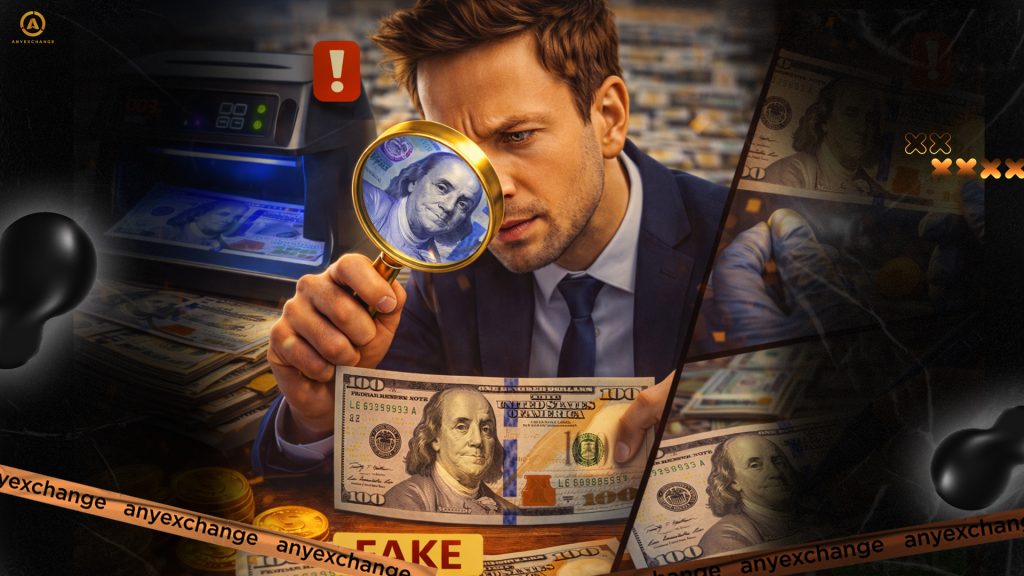
By 2026, there will be between 15 and 30 million counterfeit dollar bills in circulation, roughly one for every 40,000 to 80,000 genuine bills.
Though this figure is significantly lower than in the 2000s, counterfeiting still causes significant economic damage—the problem hasn’t disappeared, even with the introduction of cutting-edge security technologies. Counterfeiters have kept up with technological advances, using digital printing, artificial intelligence, and affordable printing technologies to create increasingly high-quality counterfeits.
In this article, we’ll discuss how to distinguish genuine dollars from counterfeit ones and which methods of checking bills work in real life.
Why the Counterfeit Dollar Problem Remains Relevant
The U.S. dollar is one of the most counterfeited currencies. As the world’s leading reserve currency, it is used in approximately 90% of international transactions and circulates far beyond the US. This global distribution makes it a prime target for counterfeiters.
Counterfeit dollars account for about 2.3% of the global circulation of counterfeit currencies and goods. Although the rate of counterfeit $100 bills has decreased by 85% since 2025 due to improved security, the total volume of counterfeit bills is still estimated at tens of millions of dollars.
Organized crime groups in North Korea and Latin America produce them on an industrial scale. For example:
- In Peru, underground printing houses produce up to 60% of the world’s counterfeit dollars.
- In North Korea, the regime has produced “Supernotes,” high-quality counterfeit $100 bills, at the state level since 1989. They use professional printing technologies and high-quality materials procured through backdoor routes in Japan, Hong Kong, and Europe.
- Modern counterfeits are increasingly developed using AI tools to replicate designs and 3D printing to imitate protective textures and fibers.
Don’t think that counterfeits circulate only on the underground market—counterfeit dollars are constantly encountered in everyday life during currency exchanges, purchases, and payments. According to statistics, up to 80% of counterfeit bills are detected in everyday circulation, such as in stores, gas stations, markets, tourist areas, and transactions between individuals.
Receiving counterfeit money is unpleasant and ultimately leads to losing it forever because banks and exchange offices confiscate it without compensation. This is just one of many consequences of such surprises.
- There is legal hassle. If you try to pay with counterfeit money, for example in a store or when giving it to someone else, it can be classified as an attempt to sell it deliberately. In the US, this offense carries a penalty of up to 20 years in federal prison and a fine of up to $250,000. If it is proven that the act was accidental and not committed with malicious intent, jail time can usually be avoided. However, proving your innocence can be very difficult and expensive.
- There are also problems with large transactions. It is especially risky to accept dollars as payment for a car or apartment, or to exchange large amounts of currency. If you don’t know how to verify the authenticity of $100 bills and discover counterfeit bills after the transaction is complete, you will make virtually no profit.
- Small businesses that deal with cash face difficulties. For owners of stores, cafés, and salons, the risks increase exponentially. Small businesses lose huge amounts of money every year due to counterfeiting. This also significantly damages their reputation.
Which dollar bills are most often counterfeited?
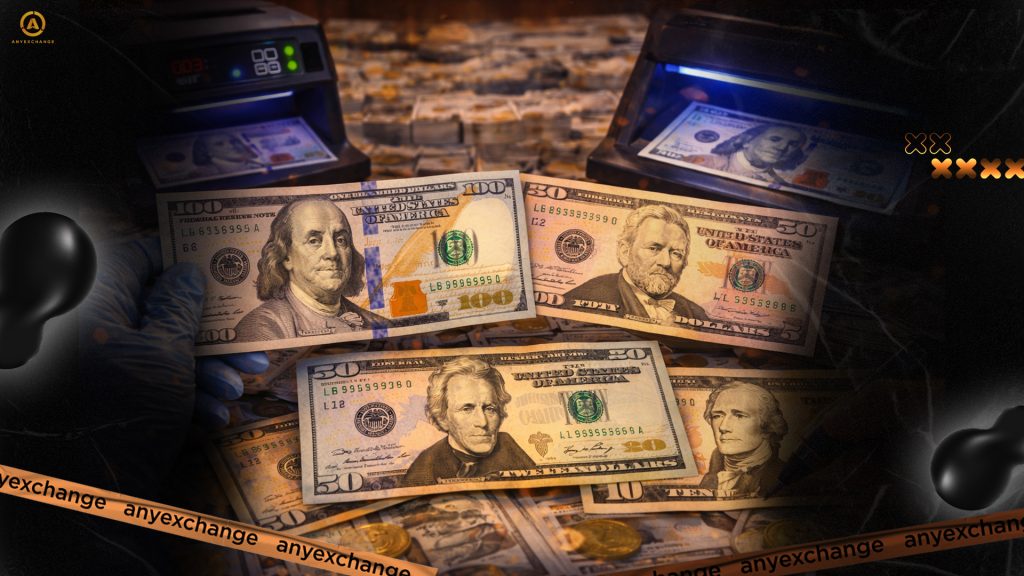
Not all banknotes are equally attractive to counterfeiters. Criminals choose denominations that are profitable and easy to sell in everyday transactions. The $20 and $100 bills remain the most counterfeited. The $1 and $2 bills are less popular because the profit from counterfeiting them is too small.
- Within the US, the $20 bill is the most counterfeited denomination, accounting for approximately 60% of all counterfeits. It is popular among fraudsters because it is widely used in everyday transactions and does not arouse suspicion among merchants.
- The $100 bill is the second most counterfeited bill in the U.S. and the most popular outside the country. It circulates extensively internationally because of its high value, its use for savings, and its use in currency exchange.
The age of the banknote directly affects the likelihood of counterfeiting. Older series (pre-1996) are significantly more likely to be counterfeited because they have fewer security features and are easier to reproduce with a standard printer. Newer series, especially those issued after 2013, offer significant protection against counterfeiting, including:
- A 3D security blue ribbon on the $100 bill.
- High-quality watermarks.
- Color-shifting ink.
- Complex microprinting.
- Security threads with a unique glow.
Key signs of counterfeit dollars
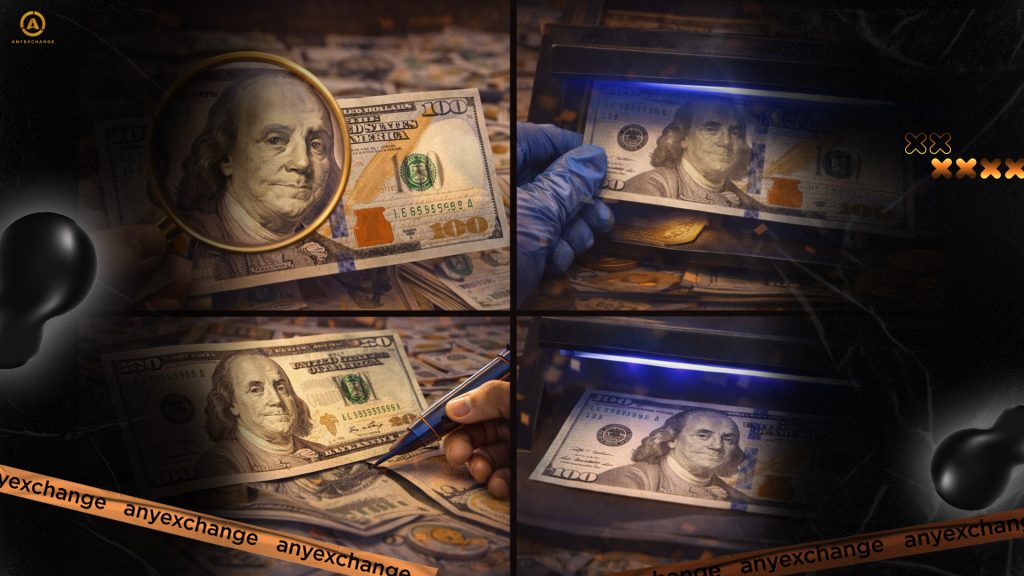
In order to avoid buying counterfeit money, it’s important to know what it looks like. Counterfeit dollars can look quite convincing. Let’s learn how to spot a counterfeit dollar bill.
Paper and Print Quality
One of the main signs of a counterfeit is smooth paper—counterfeit dollars are usually printed on standard paper, which is slightly shiny and has no interwoven fibers. Genuine dollars, on the other hand, are printed on paper made of 75% cotton and 25% linen. The paper is thick yet flexible with a slightly rough surface, and red and blue fibers are visible within its structure.
Genuine dollars are printed using the intaglio (gravure) printing method. This creates noticeable relief, especially on the portrait, the “United States of America” inscription, and the denomination numerals.
Colors, Lines, and Micro-Details
Genuine banknotes have clear lines and micro-details. What to look for:
- Micro-printing. There is text smaller than a millimeter around the portrait and in the frame elements. On counterfeits, this text is either absent or reduced to fuzzy dots.
- Color-shifting ink: Elements on bills of $10 and higher change color when tilted (usually from copper to green). If the color does not change, the bill is suspect.
- There is a EURion constellation. It is a security pattern consisting of five small circles arranged in a pattern reminiscent of Orion’s Belt. Copy machines and printers recognize it, which blocks printing or scanning to prevent counterfeiting.
When examining a bill, pay attention to the following details:
- The portrait appears dull or too dark.
- The eyes in the portrait are unclear.
- The serial numbers are uneven.
- The elements are not arranged symmetrically.
How to check a dollar bill without equipment
Most counterfeit bills are detected not in laboratories, but in ordinary stores and cafés during everyday transactions. Therefore, it’s important to know how to verify dollars quickly and without special tools.
How can you avoid accepting counterfeit dollars? Follow the “Look, Feel, Tilt” rule. It detects about 80% of counterfeits immediately.
Here’s what each step means:
- Look: Check the bills against the light.
- Watermarks: When held up to the light, a hidden portrait or symbol should be visible from both sides.
- Security thread: The denomination and the word “USA” should be visible on the vertical strip of microprinting woven through the bill.
- Feel: Check by touch.
- Paper texture: Genuine bills are crisp, durable, and flexible.
- Relief: In areas of the main printing, such as the portrait, denomination, and inscriptions, the ink is thick. Running your fingernail across the surface should reveal the characteristic relief.
- Tilt: Check the bill for dynamic effects.
- Color-shifting ink: When tilted, the denomination numerals in the corner or special symbols (such as the bell on the $100 bill) change color.
- Holograms and 3D ribbons: Elements on modern banknotes can “move” when viewed at an angle.
Checking Dollar Bills with Simple Tools
Basic dollar bill checks can detect most counterfeits, and using simple tools can increase accuracy to almost 100%. These methods are widely used in currency exchange offices, stores, and banks.
Using Ultraviolet Light
Ultraviolet testing is considered one of the most reliable ways to verify dollar bills. Genuine banknotes have a built-in security thread that glows a specific color depending on the denomination:
- $5: blue
- $10: orange
- $20: green
- $50: yellow
- $100: red
If the thread does not glow or glows a different color, it is counterfeit. Note: Genuine dollar bills do not glow, so if a bill flickers under a lamp, it is counterfeit.
Bill checking marker
This quick and inexpensive method is often used by cashiers and market vendors. A special detector marker containing an iodine compound reacts with the starch in ordinary paper. Drawing a line with the marker produces the following results:
- A nearly transparent line indicates the bill is genuine.
- If the line darkens and turns brown, blue, or black, the bill is counterfeit.
Note that high-quality counterfeits can be printed on special paper without starch, and improper storage conditions can cause the marker to produce a blurry image. Therefore, this method is not 100% guaranteed. It’s best used in combination with other methods.
Comparison with a Known Genuine Banknote
One of the simplest and most underrated methods for identifying counterfeit dollars is to compare the bill in question with a known genuine banknote. Take a bill that you know is genuine, such as one that you received from a bank, and compare it. The differences will be immediately noticeable. This method is especially useful for checking dollars during an exchange when you have the opportunity to compare several bills.
What to Do if a Bill Raises Doubts
Finding a suspicious bill is an unpleasant situation, but it’s important to act correctly. Mistakes at this point can lead to financial or legal problems. Therefore, it’s important to clearly understand how to handle questionable bills and which actions are safe.
- Refuse to accept the bill if you have even the slightest doubt.
- What should you do if you come across counterfeit dollars? If you already have a suspicious bill, contact your bank or an official currency exchange office. They have professional verification equipment and can determine its authenticity.
- Do not attempt to pass off counterfeit bills. Even if you receive them accidentally, deliberately attempting to pay with them may be considered a crime.
How to reduce the risk of receiving counterfeit dollars
- Withdraw cash only through reliable channels, such as banks, licensed currency exchange offices, and other official financial institutions.
- To avoid buying counterfeit currency, avoid transactions with strangers, especially street “money changers.”
- Always perform a basic on-site check (“look, feel, tilt”) before completing a transaction.
- If you keep cash at home, check the bills before using them to pay for anything or exchange them. It is especially important to double-check dollars at home if the bills have been stored for a long time or were received from different sources.
Frequently Asked Questions (FAQ)
Is it possible to accidentally pay with counterfeit dollars?
Yes, if you didn’t check the bill upon receipt. That’s why it’s important to know how to verify the authenticity of dollars. If you weren’t aware that the bill was counterfeit and this is confirmed by a check, you’re usually not held criminally liable. However, knowingly attempting to use counterfeit money is a crime.
Do banks accept suspicious bills for verification?
Yes, banks are required to check suspicious bills and submit them for examination if necessary. It’s important to understand that if a bill is found to be counterfeit, you won’t receive compensation. The bank will withdraw the bill from circulation, and the information may be passed on to law enforcement.
Which dollar bills should be checked especially carefully?
$20 and $100 bills received in private transactions, especially older series, are at a higher risk.
Should I check bills received at the bank?
The risk is minimal because banks use automatic detection systems. However, human error cannot be completely eliminated. If the amount is large, an additional check will only take a couple of minutes but will provide peace of mind.
Conclusion
Counterfeit dollars are still a problem when dealing with cash. Despite modern security and renewal technologies, counterfeit bills continue to circulate.
Therefore, the main rule remains unchanged: being attentive and checking bills immediately upon receipt is the best way to protect yourself from financial loss. Basic methods for checking dollar bills are available to everyone and take just seconds.
Thank you for your attention. Invest safely and profitably!
AnyExchange is an exchanger where you can convert cryptocurrency at the best rates and make secure money transfers worldwide.