Despite its rapid growth, the decentralized exchange market continues to face critical challenges. High gas fees, delayed transaction confirmations, and limited scalability prevent users from enjoying the full trading experience. These issues are especially noticeable during periods of high network activity, when trading becomes a battle with both volatility and the infrastructure itself.
This is where Hyperliquid comes in. Hyperliquid is a platform for decentralized trading, but it’s more than just another DEX. It’s a blockchain that rewrites the architecture of trading interactions: Hyperliquid combines the principles of complete decentralization with a level of efficiency previously achievable only on centralized exchanges.
According to experts, Hyperliquid doesn’t just adapt existing solutions — it changes the paradigm itself. In this article, we will examine how the project works, its features, and its prospects.
What is Hyperliquid?
Hyperliquid is a high-performance Layer-1 blockchain created from scratch to solve specific problems. Unlike most decentralized exchanges (DEXs) running on Ethereum or other universal networks, the Hyperliquid platform does not inherit their limitations. It offers a unique architecture with an on-chain order book, instant transaction confirmation, and virtually zero fees. This ensures stable and fast trading, even under peak loads.
Hyperliquid entered the market on May 24, 2024, with the launch of its main blockchain. On February 18, 2025, HyperEVM was launched — its own Ethereum-compatible virtual machine fully integrated at the Layer-1 level.
The project team consists of eight professionals, including five engineers and three managers. They are veterans of the crypto industry and trading systems, and have experience working in large funds and Web3 startups. After analyzing the shortcomings of existing DEXs, they decided to create their own high-performance blockchain. The project is being developed exclusively with internal resources, without attracting venture capital.
The blockchain is based on a specially developed HyperBFT consensus algorithm that ensures lightning-fast transaction finalization without compromising decentralization. This algorithm can process thousands of transactions per second without sharding while maintaining network integrity. Thanks to HyperBFT, Hyperliquid Layer-1 is one of the fastest blockchains on the market. This opens up new possibilities for DeFi products that were previously limited by the technical constraints of older networks.
The project has implemented its own virtual machine, Hyperliquid HyperEVM, which provides full compatibility with the Ethereum ecosystem. HyperEVM significantly outperforms the classic EVM in terms of speed and throughput, providing Hyperliquid with a level of scalability that was previously unavailable to decentralized solutions. The roadmap also plans to integrate with other networks, such as Arbitrum, Cosmos, and Solana. This means a multi-network ecosystem is planned in which Ethereum is just one entry point.
Advantages of Hyperliquid
Speed of execution and no fees
Thanks to HyperBFT consensus, the network confirms transactions in less than a second. For traders, this means virtually instant order execution with no disruptions during periods of high volatility. Additionally, Hyperliquid trading has no gas fees, which is one of the main differences from Ethereum, where fees can reach tens of dollars per transaction. It’s important to understand that zero gas fees don’t mean there are no costs; they’re just structured differently. In Hyperliquid, rather than being charged for each transaction, fees are built into the order book, as they are on centralized exchanges. This is a classic maker-taker model where fees are charged at the transaction execution level rather than for sending the transaction itself. The income received is then distributed among the validators. This structure creates a sustainable economy in which validators are rewarded for real network activity, and traders are spared infrastructure costs.
On-chain order book and advanced liquidity
One of Hyperliquid’s key features is its on-chain order book. Unlike most decentralized exchanges (DEXs), which use automated market makers (AMMs), Hyperliquid’s order book operates similarly to centralized exchanges, but in a decentralized manner. This allows users to place limit and market orders directly instead of trading with pool liquidity. All orders are stored and processed on the blockchain. They are visible to everyone, transparent, and executed according to clear protocol rules. Additionally, Hyperliquid’s liquidity is supported by its capital allocation mechanisms and professional market makers. Thus, Hyperliquid’s on-chain order book combines the accuracy and flexibility of traditional centralized exchanges (CEXs) with the transparency and security of Web3.
In May 2025, the trading volume on the platform exceeded $248 billion, establishing Hyperliquid’s order book as one of the most active among DEXs. This demonstrates explosive growth in interest; in May 2024, the trading volume was only $26.3 billion, almost ten times less.
Futures, leverage, and professional tools
The platform offers futures and perpetual contracts with up to 50x leverage, one of the highest rates among DEXs. This level enables traders to implement more aggressive strategies in arbitrage or algorithmic trading while maintaining control over risks. Unlike CEX, where such opportunities are accompanied by custodial risks, cryptocurrency remains under the user’s full control.
Transparency and security
The entire trading process takes place on-chain, meaning any actions can be verified through a block explorer. This eliminates the possibility of hidden manipulations that are characteristic of centralized exchanges. Hyperliquid’s security is guaranteed by strict, independent audits of smart contracts and a decentralized network of validators.
How does trading on Hyperliquid work?
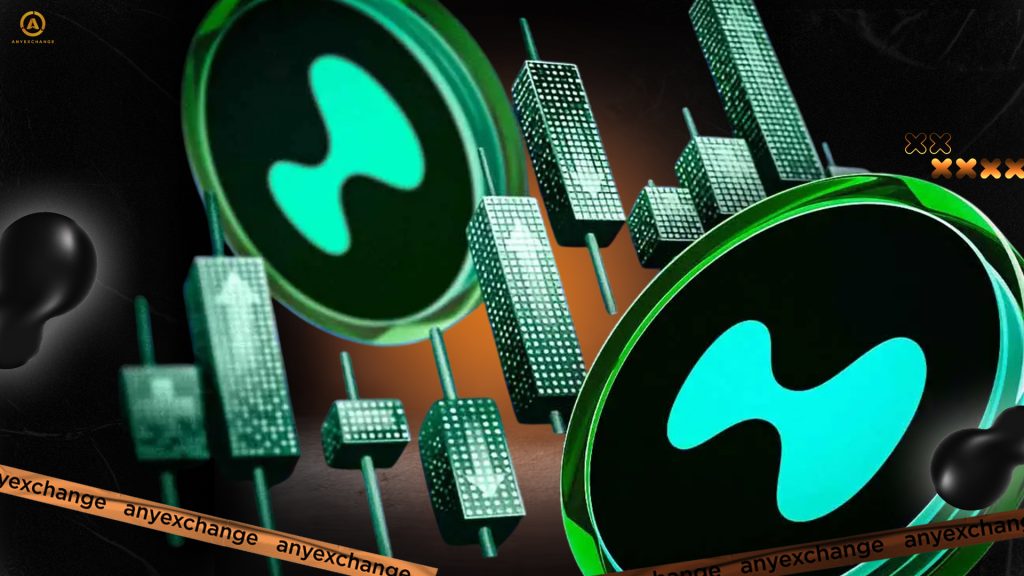
Hyperliquid’s trading systеm is based on an on-chain order book located directly on Layer-1. All orders and requests to buy or sell are processed on the blockchain in real time, ensuring complete transparency of trading activity. This eliminates issues such as hidden liquidity, front running, and manipulation — users see exactly what is happening.
The following types of trading are available:
- Spot trading with instant order execution;
- Futures and perpetual contracts form the basis of the platform’s derivative instruments.
Hyperliquid uses a reliable oracle systеm to provide accurate, stable market quotes. The platform implements an automated position liquidation systеm based on the current asset price and specified margin level. When the critical collateral level is reached, positions are partially or fully liquidated.
Risks of Hyperliquid
Smart Contract Vulnerabilities
As with any DEX, smart contracts play a crucial role in the platform’s operation. While the team pays special attention to security and conducts audits, there is no absolute guarantee of protection against bugs or exploits. Using complex contracts for order book operations, liquidations, and leverage calculations increases the area susceptible to attack.
Regulatory risks
As a decentralized platform, Hyperliquid is not yet subject to clear regulation in most jurisdictions. However, the rapid growth in trading volumes may attract the attention of regulators.
Limited Number of Trading Pairs
Currently, the platform only supports a few assets, so trading on Hyperliquid is convenient for popular cryptocurrencies but not as attractive for those who want to work with niche tokens.
Interface and complexity of entry
Despite its advanced technology, the platform’s interface may seem daunting to beginners. This is especially true when it comes to order management, margin calculation, and understanding the specifics of futures trading.
Impact and Prospects of Hyperliquid
Since its launch, the Hyperliquid blockchain has been gaining momentum at a rapid pace. The project has demonstrated steady growth in metrics and has attracted interest from traders and developers alike. Its unique architecture enables the platform to compete with the largest centralized exchanges while providing the benefits of Web3.
Growth in volume and engagement
According to Hyperliquid Explorer and other analytical resources, trading volumes on the platform have grown tenfold since the beginning of 2025. An increasing number of professional traders, bots, and DeFi protocols are connecting to the Hyperliquid order book thanks to its high speed and predictable execution. The Hyperliquid futures and perpetual contracts market is particularly active. In May 2025, these markets accounted for over 10% of Binance Futures’ trading volume. This indicates high demand for the platform, putting it on par with market leaders such as Bybit and OKX.
The role of the HYPE token
The Hyperliquid ecosystem revolves around its native token, HYPE. Despite the absence of an initial token sale or VC funding, the project is developing its ecosystem by offering incentives for activity. Network participants, including traders, validators, and developers, can expect airdrops and voting participation, as well as a future staking option that developers may add as the platform evolves. Ultimately, the Hyperliquid HYPE cryptocurrency will perform several functions: management, liquidity provision, and distribution of income to validators.
HyperEVM development and compatibility
Hyperliquid’s HyperEVM has already demonstrated successful integration with Ethereum developer tools, ranging from MetaMask to Hardhat. The team plans to expand compatibility further and implement bridges with other networks, including Arbitrum, Cosmos, and Solana. This could transform Hyperliquid Layer-1 into a robust foundation for DeFi applications that transcend basic trading.
The future of Hyperliquid
The platform has already become a significant player in the overheated and fragmented DEX market. If Hyperliquid’s growth rate continues, it will become an entire ecosystem of financial services around the L1 blockchain. This ecosystem will be able to displace both slow Ethereum projects and centralized giants.
Conclusion
Hyperliquid has already established itself as one of the most innovative projects in decentralized trading. Thanks to its unique architecture focused on speed, scalability, and transparency, the platform successfully solves key problems faced by users of traditional DEXs.
Given the rapid growth in trading volumes, community activity, and ambitious plans to expand functionality, Hyperliquid’s future looks promising. Hyperliquid is no longer just an experiment; it is a mature, powerful player that is changing the rules of the game in Web3 trading.
Thank you for your attention. Invest safely and profitably!
AnyExchange is an exchanger where you can convert popular cryptocurrencies at the most favorable rate, as well as make fast and secure money transfers around the world.
FAQ
What is Hyperliquid?
Hyperliquid is a high-performance, decentralized platform with its own Layer-1 blockchain designed specifically for trading. Hyperliquid implements virtually instant order execution, zero gas fees, support for derivative trading, and leverage of up to 50x.
Why is Hyperliquid better than other DEXs?
Unlike an AMM, Hyperliquid’s order book operates on a classic exchange model, ensuring quote accuracy and flexibility in order management. HyperBFT consensus and the HyperEVM virtual machine allow the platform to outperform its competitors in terms of speed, transparency, and scalability.
What are the risks of Hyperliquid?
Potential vulnerabilities in Hyperliquid smart contracts, regulatory uncertainty, a limited number of trading pairs, and a relatively complex interface for beginners are a few of the risks.
How does Hyperliquid use HyperEVM?
HyperEVM is an Ethereum-compatible virtual machine designed for high speed and scalability. It allows users to easily transfer decentralized applications (dApps) from other networks and use familiar tools without overloads and high fees.
Where can I buy the HYPE token?
Currently, HYPE can be purchased directly on the Hyperliquid platform and on popular centralized exchanges, such as Gate, Bitget, and KuCoin. Additionally, tokens can be obtained through airdrops and activity programs within the Hyperliquid ecosystem.