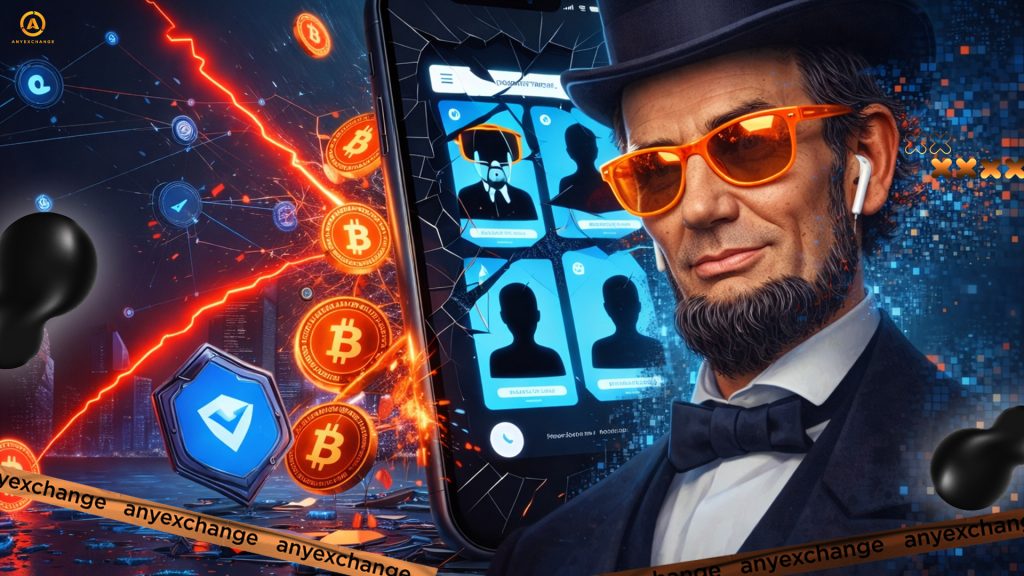
In 2023, a high-profile incident swept across social media. Charlize Theron’s Instagram account was hacked, and in a matter of minutes, it was transformed into a platform for an aggressive crypto scam. Imagine opening the feed of the Oscar-winning actress, expecting to see behind-the-scenes photos from filming or her latest charitable initiatives, only to be bombarded with stories about “lucrative NFTs,” “exclusive tokens,” and demands to “invest immediately.”
This was one of the first major cases and a harbinger of a future trend: hacking celebrity accounts for crypto fraud. The incident involving the famous actress’s account was a wake-up call for the entire industry. Even global stars with professional security teams were becoming victims. Such attacks soon became widespread and routine. Crypto-based social media fraud grew so much by 2025 that any influencer—from actors to sports stars—was at risk of becoming the face of a scam at any moment. Audiences trust these names, and this trust has become a powerful weapon for criminals.
In this article, we’ll explore how scammers exploit celebrity names in crypto, the rationale behind the new wave of attacks, and how to protect against them.
A Wave of Celebrity Account Hacks
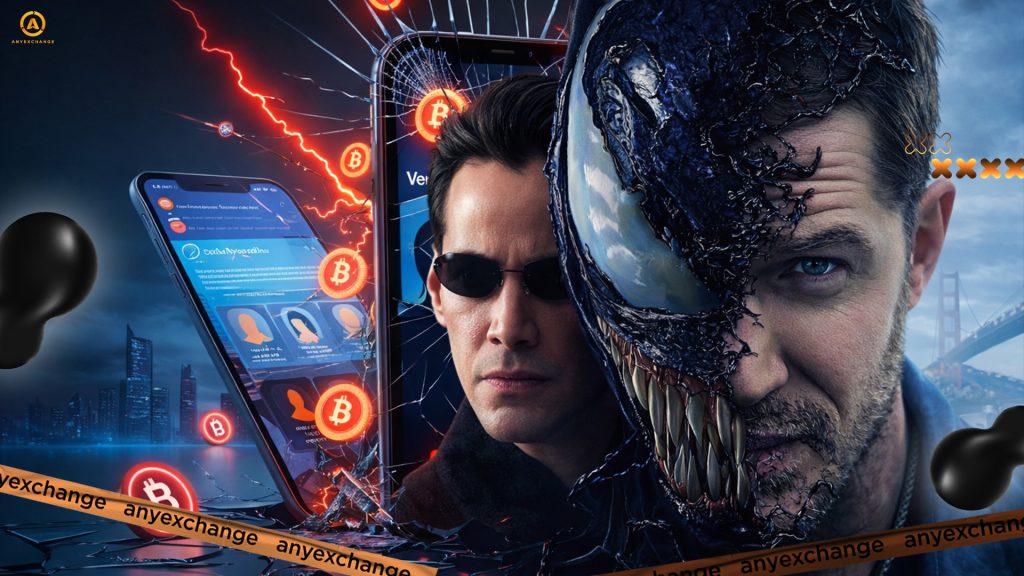
Celebrity account hacks peaked in 2024–2025, especially with the rise of memecoins on Solana. Platforms like Pump.fun made creating them easier. According to reports from Merkle Science and Spikerz, investors lost over $500 million in such schemes in 2024 and over $5 billion in 2025. Hackers increasingly use pump-and-dump attacks, which involve quickly inflating the price of a token through fake posts and then selling it, leaving fans in the red. Attackers target the accounts of celebrities with millions of followers. Recently, there has been a trend of simultaneously attacking multiple profiles for a greater viral effect.
Here are some examples of the most high-profile crypto scams of 2025:
- In February, rapper Rich The Kid promoted a scam token on X (formerly Twitter), then deleted the post an hour later, claiming his account had been hacked. However, this was enough time for the post to inflate the price, which then immediately crashed.
- Kanye West (Ye) claimed that his Instagram account had been hacked to promote the YZY memecoin, which reached a market cap of $7 million before it collapsed.
- Breaking Bad actor Dean Norris’s account promoted fake posts on X for the eponymous memecoin, DEAN. Norris later wrote, “A complete fake scam.”
- In August 2025, an unprecedented mass hack of musicians’ Instagram accounts occurred. Adele, Future, the late Michael Jackson, and Zara Larsson simultaneously encouraged their millions of followers to invest in the Solana memecoin FREEBANDZ. The hackers posted AI-generated images and stories about an “exclusive presale.” The counterfeit coin’s market cap then soared to nearly $11 million, only to plummet by 98% within minutes after someone sold approximately 70% of all available tokens in a few transactions. The posts were deleted within hours, but fans lost millions.
- The hacking of BBC journalist Nick Robinson’s X account, which has over one million followers, highlighted the risks for journalists and politicians. Robinson clicked on a phishing link, and his account immediately posted a promotion for the Solana token $TODAY, which was linked to his BBC Today show. The hackers inflated the market cap again to millions and exited within minutes.
- In 2025, Sydney Sweeney’s X account was hacked for $SWEENEY, and Metallica’s account was hacked for $METAL—both following the same pattern.
According to analytics, scammers most often target celebrities on X (formerly Twitter) and Instagram, where verified accounts with millions of followers provide instant reach. Despite its more closed architecture, TikTok has also proven vulnerable, with deepfake videos offering fake “investment advice” emerging on the platform.
How do scammers promote counterfeit tokens? After gaining access to an account, criminals typically follow the same pattern. First, they rapidly publish stories, posts, and links (an ideal tool because they disappear after 24 hours but still garner clicks). Then, they launch live streams with “crypto giveaways.” The scammers use a deepfake celebrity voice or generated image. Such schemes are often promoted through Telegram and X bots, which are an example of new investor fraud schemes that allow for rapid fundraising.
How crypto scams work through social media
The main goal of the attackers is to monetize the hack within the first few hours, before the celebrity’s team restores access and the platforms respond. To achieve this, they use proven schemes to promote fake tokens and scam people with the help of famous names:
- Pump-and-dump schemes. First, a memecoin (for example, $SWEENEY) is created and promoted through a hacked account. Then, the scammers inflate the price through FOMO. Finally, they dump their shares and disappear without a trace.
- Another scheme is fake airdrops. They promise “free” coins for connecting a wallet to a “limited airdrop” and steal the funds.
- They steal cryptocurrency through fake streams. In these fake streams, the celebrity allegedly gives away cryptocurrency to those who send tokens to a specified address.
Deepfake videos are becoming a key part of crypto scams. While AI technologies were used sporadically in 2022–2023, today, we see complete examples of crypto advertising featuring fake celebrities who “personally” recommend a new token, NFT drop, or supposedly guaranteed investment. These videos feature extremely realistic voice models, gestures, and facial expressions, all of which are created without human intervention. In 2025, deepfakes cost fans $5.3 billion.
Scammers are literally churning out fake Taylor Swift and Scarlett Johansson “recommending” investments. It works perfectly, which is the main reason celebrities have become targets for crypto scammers—their audiences are huge, gullible, and react instantly. Incidentally, Taylor Swift tops McAfee’s list of the most dangerous deepfakes.
Industry and Celebrity Reactions
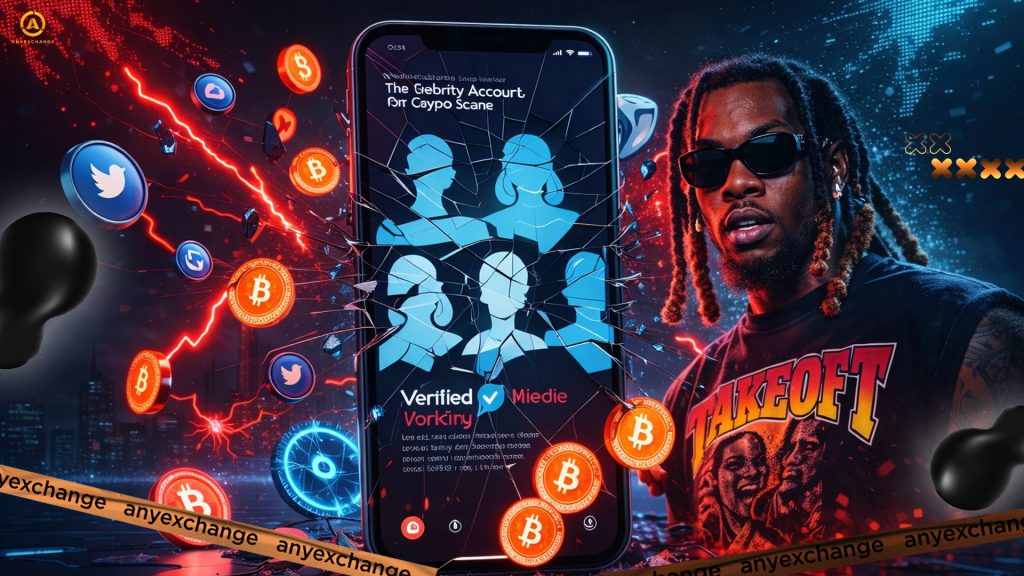
The list of cybercrime victims in 2025 reads like a who’s who of celebrities. Musicians, actors, athletes, and bloggers are all affected. Even the legendary Michael Jackson’s account was compromised.
In most cases, celebrities must publish urgent clarifications as soon as they regain access to their accounts. These statements inсlude retractions, apologies to fans, and warnings about the risks. Celebrities try to announce as quickly as possible: “I’ve been hacked!” like Zara Larsson did. Others, like Kanye West, reveal the scheme itself. He was offered $2 million for a “fake” hack.
Internal investigations are launched in parallel. Security teams are studying login routes and analyzing who is behind the celebrity account hacks. In some high-profile cases, celebrities have hired independent OSINT experts and digital forensics companies to track down the crypto addresses used to steal funds.
In turn, platforms are taking steps to strengthen cybersecurity. The scale of the attacks is forcing them to updаte their security protocols and conduct outreach efforts to ensure users know how to protect their accounts from crypto hacking.
- X announced a new authentication level. They have also introduced internal activity analysis mechanisms that automatically block suspicious posts, including those that trigger hacking of Twitter accounts for crypto advertising.
- Meta has strengthened login filters and updated its algorithms for monitoring abnormal activity. The platform has also launched a new response protocol for accounts with more than one million followers and implemented verification for financial advertising.
How to protect yourself from crypto scams
- Check your sources. Always verify the source of your information. Before clicking on a link, verify that the domain matches the official website of the project or platform. Scammers often create websites that look like exchanges and wallets but link to fake fundraising pages. If a celebrity is promoting a new token or NFT, check the official website, verified channels, or public interviews for additional confirmation of the campaign.
- Don’t click on links in suspicious messages. Attacks are increasingly occurring through direct messages and comments. Any request to click a link, verify your wallet, or receive a “participation bonus” should raise suspicion. Scams launched through hacked celebrity profiles usually have an aggressive call to action, such as a limited time offer or a “just for you” offer.
- Use two-factor authentication and hardware wallets. Set up multi-factor authentication. Use apps like Authy or Google Authenticator instead of SMS. Use hardware wallets to store significant amounts of cryptocurrency. They are not connected to the internet and cannot be hacked remotely, even if your social media is compromised.
- Report suspicious activity. Facebook and Instagram allow you to report an account that impersonates a public figure. The sooner you report it, the faster the moderators will disable the fake profile. If you witness a large-scale scam, report it to your country’s cyber police.
Impact on reputation and the market
Each major incident involving the compromise of a public account not only damages a celebrity’s reputation, but also undermines the entire crypto industry. When millions of users witness scammers distributing fake drops or NFT projects in the name of celebrities, trust in legitimate projects declines. This creates informational noise that hinders the promotion of genuine innovation and undermines the industry’s image.
As crypto scams increasingly impact market trust, many experts have begun discussing the need to implement strict standards for verifying advertising campaigns. These standards inсlude mechanisms that confirm promotions are posted by a celebrity or brand. Such certification helps prevent the automated distribution of fraudulent content. Some platforms are testing special labels for official crypto partnerships. If this becomes an industry standard, users will more quickly distinguish real campaigns from fake ones, and companies will protect their brands from reputational attacks.
Consequences for Fans and Investors
Fans are the most vulnerable participants in the ecosystem. Their trust in their idols makes them an ideal target. Many followers act impulsively. They see a story, click a link, and send funds.
Investors suffer as well: the hype surrounding investigations into attacks on Instagram celebrities creates an atmosphere of uncertainty in the market. When news about hacks and fake tokens fills the media, investment activity declines and new projects become less credible. In the long term, this affects all segments of the crypto market, from DeFi to NFTs.
FAQ — Frequently Asked Questions
- How can I tell the difference between a legitimate and a fraudulent crypto project?
How can I identify crypto scammers on social media and avoid becoming a victim of social engineering? Always check official sources, such as the website and related publications in major media outlets. A legitimate project will never be promoted through a single story or a dubious link in the comments alone.
- Can I recover funds sent to scammers?
Generally, no. Most attackers use anonymous blockchain addresses and mixers to prevent transaction tracking. Funds can only be partially recovered in rare cases where an investigation is carried out quickly and the addresses are taken over by exchanges.
- Who investigates crypto hacks and phishing attacks?
Cyber police units, social media security teams, private digital forensics firms, and the analytics departments of major exchanges carry out investigations. Many platforms run joint monitoring programs to quickly track suspicious activity and share information with law enforcement.
- How can public accounts be protected from compromise?
Key measures inсlude using two-factor authentication, restricting access to third-party apps, storing passwords in password managers, and regularly auditing linked devices. Security tips for influencers and investors inсlude using dedicated devices for social media to minimize the risk of malware infection.
Conclusion
By 2025, hacking celebrity accounts had become a common tool for pressuring the crypto industry. These are no longer isolated incidents but rather a massive wave of attacks in which criminals exploit audience trust as their primary weapon. They steal celebrities’ identities, create fake tokens, and distribute scams in their names. They promote these scams through stories, ads, live streams, and deepfake videos. The compromise of public accounts has become a new form of cyberwarfare, and hacked celebrity accounts on Instagram and X are among the most common attack vectors for investors.
The main conclusion is simple: no “hot investments,” “exclusive drops,” or “limited stocks,” even those promoted by celebrities, should prompt impulsive decisions. Users must improve their digital hygiene, implement various levels of protection, and remember that awareness and critical thinking are the most reliable defenses against scams of all types.
Thank you for your attention. Invest safely and profitably!
AnyExchange is an exchanger where you can convert cryptocurrency at the best rates and make secure money transfers worldwide.