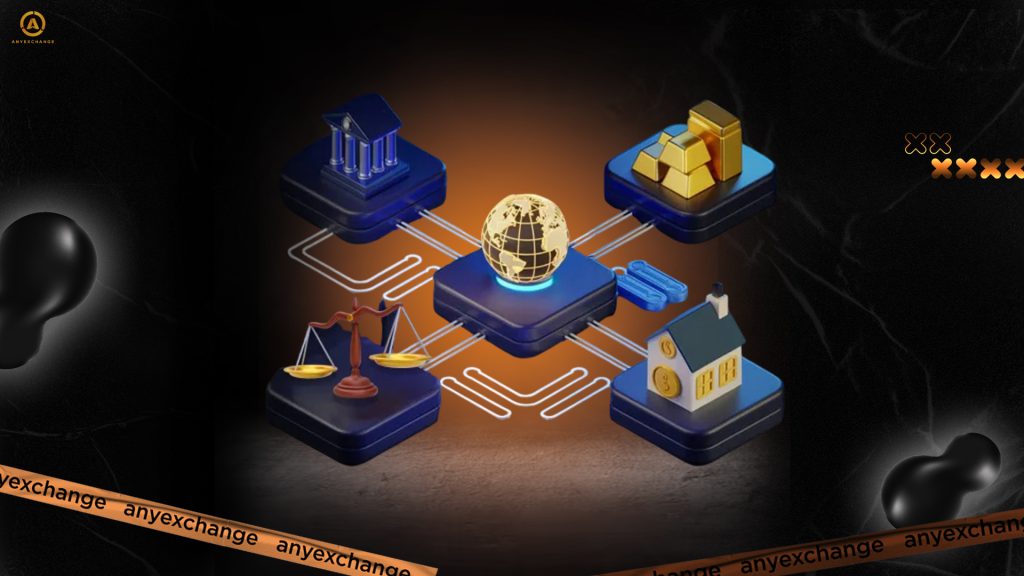
By 2025, tokenization had become a key area of development for digital finance and fintech. Banks, investment funds, and technology companies have been actively introducing asset-backed tokens, which link digital tokens to real-world assets, including real estate, gold, bonds, and stock indices.
This trend paves the way for new financial products that combine blockchain’s advantages with the stability of the traditional economy.
What is asset tokenization?
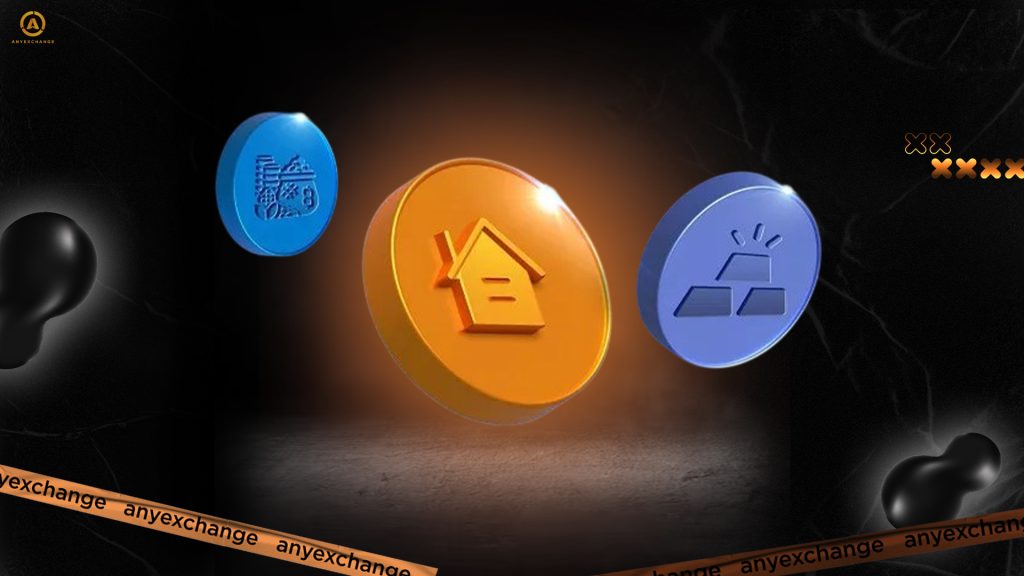
Asset tokenization, or the tokenization of real world assets (RWAs), is the process of converting a real asset, such as a building, stock, commodity, or fund, into a digital token on the blockchain. Each token represents a share of ownership or the right to a portion of the profits from that asset.
Whereas owning real estate or gold previously required a significant investment and complex procedures, it is now possible to invest “in parts” by purchasing a token backed by a real asset.
This process is a digital evolution of securitization, a term from traditional finance. Banks used to convert loans or real estate into tradable securities; now, blockchain does the same, but with greater transparency and liquidity.
Definition and Key Principles
What are asset-backed tokens? The basic principle of tokenization is to link the value of a digital token to a specific real asset. This asset can be tangible property, such as real estate, or a financial instrument, such as a bond, exchange-traded fund (ETF), or derivative.
Each token stores data about the owner and confirms their share through blockchain technology, ensuring the transparency and immutability of the data.
The difference between cryptocurrencies and asset-backed tokens
The main difference lies in the source of value. Cryptocurrencies, such as Bitcoin and Ethereum, exist independently and are not tied to physical assets. Their price is determined by supply and demand. Asset-backed tokens, on the other hand, are backed by real assets and operate within the blockchain infrastructure, making them similar to traditional financial instruments.
Types of Tokenizable Assets
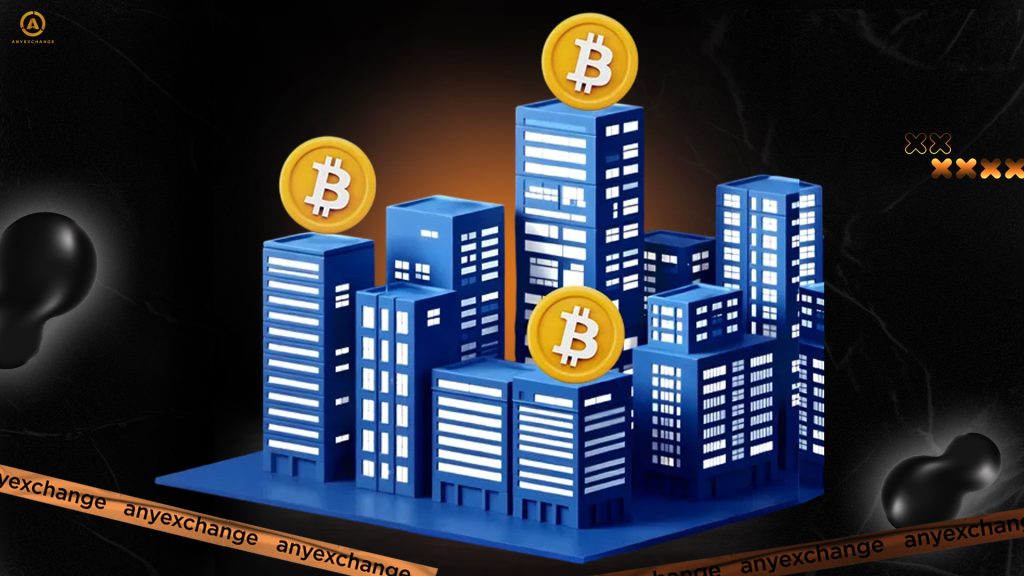
Tokenization covers an increasing number of asset classes, including luxury real estate, treasury bonds, and commodities. In 2025, the tokenization of real world assets (RWAs) drove the creation of digital funds, derivatives, and ETFs available to investors worldwide.
Real estate
Real estate is one of the most popular areas of tokenization. Previously, only large investors could buy a share in a building or business center, but now ownership can be divided into hundreds or thousands of tokens.
In the US, for example, RealT issues tokens backed by residential properties in Detroit and Miami, and in Europe, Brickken is implementing similar projects.
Each token entitles the holder to a share of the rental income and any increase in the property’s value.
Gold and commodities
The tokenization of gold and other commodities makes it possible to invest in physical assets without incurring storage and transportation costs. One example is the PAX Gold (PAXG) project, where each token is backed by one troy ounce of gold stored in London vaults. Similar solutions are also used for oil, silver, copper, and carbon credits, which are a growing class of “green” assets.
Bonds, stocks, and debt obligations
The tokenization of bonds and securities, especially government bonds, is developing rapidly as well. In 2025, Singapore and Hong Kong launched pilot programs in which debt obligations were issued as tokens on private blockchains. Similar projects are being tested in Switzerland and Brazil. For instance, Commerzbank in Germany successfully issued tokenized corporate bonds, reducing placement costs and increasing transparency for regulators. This approach can also be used to tokenize private companies’ and funds’ debt obligations.
Funds and derivatives
Tokenizing derivatives and ETFs enables the creation of digital equivalents of complex investment instruments. Securitize, for instance, has launched a tokenized private equity fund, and Franklin Templeton offers stock market tokenization through its blockchain fund, which is traded on Stellar and Polygon.
Advantages of Asset Tokenization
- Liquidity and fractional ownership. One of the main advantages is the creation of a liquid market for illiquid assets. In the past, shares in office buildings or paintings by famous artists could not be sold quickly. Today, however, it is possible to divide property into hundreds of tokens that can be freely exchanged on specialized platforms. Investors can buy shares in real estate, bonds, or funds and sell them at any time without notaries, brokers, or complicated procedures.
- Thanks to blockchain, transactions are transparent and secure. Blockchain technology ensures transparent transactions and protects data from falsification. Every action, such as a purchase, transfer, or burning of a token, is recorded in a public ledger. Smart contracts automate the terms of ownership and profit distribution, eliminating the human factor and the risk of manipulation.
- Access to investments is simplified. Whereas it previously took tens of thousands of dollars to invest in real estate, funds, or precious metals, now just a couple hundred dollars is enough.
Risks and barriers
- Regulatory uncertainties. Different countries have taken opposite approaches. In Singapore and Switzerland, for example, tokenized securities are recognized as legitimate financial instruments. In contrast, regulation in the US and EU is still fragmented. The main question is how to classify asset-backed tokens: as securities, digital assets, or a separate class altogether.
- Technological challenges. The second problem is infrastructure incompatibility. For instance, an issuer may create tokens on one blockchain while investors and custodial services use a different one. This creates compatibility and transaction speed problems.
- Additionally, reliable storage and auditing of collateral data are required. If a token is backed by gold or real estate, their existence and current value must be confirmed. Even minor discrepancies in this information can erode confidence in the project.
Trust and asset-backed risks
Some projects, especially in the early stages, use partial collateralization or overvalue their assets. This creates risks comparable to stock market bubbles. Investors demand independent auditors and regular reserve reports, as is the case with Tether Gold and the Franklin OnChain U.S. Government Money Fund, for example.
Asset-backed tokens and their role in finance
Asset-backed tokens are becoming the link between traditional markets and Web3, changing the rules of the game in DeFi and the banking sector.
How Secured Tokens Work
The concept is simple yet powerful: each token is backed by a verified asset, whether through a smart contract or custodial report. For instance, if a token is linked to gold, an equivalent amount of bullion is stored in a vault. If the token is linked to a fund or bond, it reflects a share of the portfolio or interest yield.
This systеm provides transparency, allowing investors to see how asset tokenization works in practice with a clear link between the digital and physical economies.
Examples of successful projects:
- The Franklin OnChain U.S. Government Money Fund (FTIXX), for instance, is the first registered fund in the U.S. to be converted to a tokenized format. It issues tokens backed by short-term U.S. bonds.
- PAX Gold (PAXG) is a benchmark model for the tokenization of gold and other commodities; one PAXG token equals one ounce of gold.
- Ondo Finance provides tokenized versions of BlackRock and Franklin Templeton funds, giving retail investors access to institutional products.
- Backed Finance (Switzerland) tokenizes Tesla shares and ETF indices and integrates them into DeFi platforms.
- Matrixdock, based in Singapore, issues tokens backed by short-term debt instruments with yields comparable to those of U.S. Treasuries.
These examples of asset tokenization around the world demonstrate that it is a legitimate market, not an experiment, with billions of dollars in turnover.
The impact on DeFi and traditional finance
Asset-backed tokens and DeFi represent another key point of convergence between the two sectors.
Asset-backed tokens are already being used as collateral in lending protocols such as Aave and MakerDAO. This reduces the volatility of DeFi systems and increases their stability. For traditional banks and funds, RWA is a tool that allows them to integrate with the digital economy without losing control or trust. Financial institutions are beginning to view tokenization as a fintech trend that makes the market more flexible, transparent, and secure.
Prospects for Tokenization in the Future
By 2025, it was evident that this tool had become a strategic vector for global finance. The main driver of growth is institutional players.
Major management companies, including BlackRock, Franklin Templeton, J.P. Morgan, and Fidelity, are researching the current situation and future of asset-backed tokens and creating their own platforms for issuing tokenized assets.
According to the Boston Consulting Group, the tokenized RWA market could exceed $16 trillion by 2030, and tokenization could cover up to 10% of global financial instruments by 2026. For funds, tokenization is a way to increase efficiency, reduce commissions, and attract a new audience through investments in tokenized assets.
Tokenization is being adopted by banks and funds
Tokenization in the banking sector is developing rapidly.
SEBA Bank in Switzerland, Société Générale in France, and DBS Bank in Singapore already offer their clients services for issuing and trading tokenized bonds and funds.
Market Development Forecast
Experts predict that over the next five years, the industry will undergo large-scale standardization: unified protocols, KYC infrastructure, and a legal framework for regulating asset tokenization will emerge. In essence, tokenization could become a universally applicable model for digitally using any asset in the digital era, ranging from corporate debt to works of art.
FAQ — Frequently Asked Questions
What is asset tokenization, and how does it differ from conventional cryptocurrencies?
Tokenization of real world assets (RWA) is the process of converting a real asset into digital form on the blockchain. Unlike cryptocurrencies, tokenized assets are backed by collateral — each token has a specific value.
Which assets are most often tokenized (real estate, bonds, or gold)?
The following areas are developing most actively in 2025:
- Tokenization of real estate and funds, which provides access to income-generating real estate through digital shares;
- Tokenization of gold and commodities, which involves tokens backed by precious metals and commodities.
- Tokenization of bonds and securities: issuance of government and corporate debt instruments in tokenized form.
- Tokenization of derivatives and ETFs involves creating digital analogues of funds and complex investment products.
What are the advantages and risks of asset-backed tokens?
The main advantages are liquidity, transparency, reduced costs, and fractional ownership. Investors can purchase small shares of large assets, and transaction data is recorded on the blockchain.
Risks of tokenizing financial instruments inсlude regulatory uncertainty, technical failures, and trust issues regarding token collateral.
How does regulation affect the development of financial product tokenization?
Countries with clear laws, such as Singapore, Switzerland, and Hong Kong, are experiencing rapid growth in this sector. Meanwhile, the market is growing more slowly in the US, EU, and a number of Asian countries due to the lack of uniform regulatory standards.
Conclusion
RWA tokenization has moved beyond the experimental stage and is establishing the foundation for a new financial infrastructure. By 2025, it will bridge the gap between traditional markets and the blockchain economy, creating hybrid instruments that combine sustainability and technological sophistication.
Thanks to the tokenization of financial products, investors will be able to work with real assets in a digital format. Companies will also be able to speed up operations and reduce costs. The development of asset-backed tokens paves the way for global digital liquidity, where assets such as gold, real estate, bonds, and funds exist as tokens, available at the click of a button.
While tokenization may still seem like an innovation today, it will most likely become the “new standard of ownership” tomorrow.
Thank you for your attention. Invest safely and profitably!
AnyExchange is an exchanger where you can convert popular cryptocurrencies at the most favorable rates. Our platform also offers fast, secure money transfers worldwide.