
Financial markets rarely show such clear unanimity. Investors are entering 2026 with a level of optimism not seen since the post-Covid rally. According to Bank of America, investment sentiment in global markets today is characterized by an almost complete absence of defensive strategies and extremely bullish expectations against a backdrop of minimal cash in portfolios.
Stock indices are hitting new highs, gold is holding steady at peak levels, and Bitcoin is once again attracting institutional attention. It’s a picture-perfect scenario. However, historical data shows that record investor optimism often signals the maximum risk of a reversal.
Let’s take a closer look at today’s market sentiment, the winning assets, and what investor optimism means in practice.
Bank of America Survey Results
Bank of America (BofA) is one of the world’s largest investment banks, with over a century of history, trillions of dollars under management, and a vast client base. Its research results are used as guidance by institutional investors, hedge funds, and central banks.
The Bank of America Global Fund Manager Survey is considered one of the most authoritative indicators of market sentiment. Conducted monthly for decades, it reflects the actual positions of professional managers rather than abstract expectations. Thanks to its high representativeness and stable methodology, Bank of America (BofA) data is one of the key benchmarks for understanding investment sentiment and future asset dynamics.
This survey’s particular significance lies in its contrarian nature. Historically, when Bank of America indicators reach record bullish levels, it is almost always an indication that the market is overheating. A classic combination that is often followed by a sharp correction is minimal cash in portfolios, an almost complete absence of hedges, and maximum optimism among managers.
Bank of America Markets’ January analysis is based on responses from 96 global institutional managers who collectively control approximately $575 billion in assets under management (AUM). To understand these dynamics, it is helpful to compare the current results with those from December 2025, when 238 managers with $364 billion in AUM participated in the survey. Despite the smaller number of respondents, the current sample reflects the concentrated opinions of the largest players.
The survey data reflects extreme values. The share of cash in portfolios fell to 3.2%, an all-time low. Meanwhile, Bank of America’s Bull & Bear Indicator rose to 9.4 points, entering the “hyper-bullish zone,” last observed in summer 2021.
Thirty-four percent of participants expressed expectations of an economic boom within the next 12 months — the highest percentage in four and a half years.
At the same time, nearly half of the respondents said they did not have any hedges against falling stocks. This directly reflects the growing confidence investors have in the markets and their belief that the rally will continue. Thus, the current configuration is the most aggressive bullish signal in recent years.
Reasons for Record Optimism
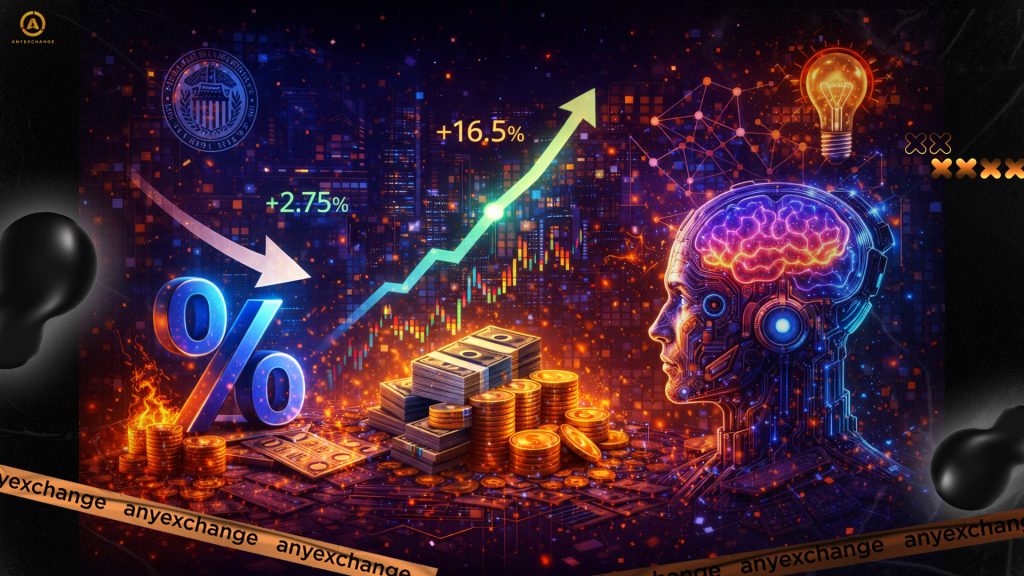
Decreased Inflationary Pressure
One of the key factors contributing to investors’ record optimism was the significant reduction in inflationary concerns. Net inflation expectations in the Bank of America survey fell to their lowest levels in several years. Most market participants are betting on a scenario of gentle economic adjustment to high interest rates. In December 2025, 57% of respondents expected a gradual slowdown in economic growth. Three percent expected no growth, and only 3% anticipated a sharp decline.
Expectations of monetary policy easing
The second driver was market expectations of the Fed and central banks. Although enthusiasm for immediate rate cuts cooled somewhat in January, the overall perception of liquidity is the best it has been in five years. BofA forecasts two cuts to the Fed’s key rate in the second half of 2026.
Growing confidence in economic recovery
An additional argument in favor of optimism was the sharp increase in global growth expectations. The net balance of respondents forecasting an acceleration in the global economy rose to +38% over the month. Bank of America officially estimates U.S. GDP growth at 2.4% in 2026, which is higher than the market consensus.
Which markets are benefiting from this optimism
The stock market and technology companies
The stock market remains the main beneficiary of this sentiment. According to the survey, the share of funds with increased exposure to stocks is approaching recent highs. Investors are betting on a mild economic slowdown, if any, in which corporate profits continue to grow.
Despite the fact that, as early as 2025, the risk of overheating in the AI segment was cited as one of the main risks, companies related to artificial intelligence and digital infrastructure remain a key driver of stock indices. Consequently, investments in stocks and cryptocurrencies are increasingly viewed as complementary elements of a single, risk-oriented strategy.
Cryptocurrencies and digital assets
Forecasts for the stock market and cryptocurrencies are increasingly being considered in tandem: growing risk appetite in traditional markets is driving capital inflows into digital assets. Although the average share of cryptocurrencies in institutional portfolios remains minimal, at around 0.4%, changes in Bank of America’s position have sent an important signal to the market. Since January 2026, the bank has officially recommended that its clients hold 1 to 4% of their portfolios in digital assets and has begun fully covering Bitcoin ETFs. This gives its financial advisors the green light to recommend the ETFs for portfolio diversification.
Commodities and Alternative Investments
Improved sentiment is also benefiting commodity markets. Gold was the most “overbought” asset in the survey, with an increasing number of funds viewing it as a hedge against the macroeconomic impact on investments. Overall, commodities are at their most overweight in portfolios since 2022. This trend aligns with broader global investment trends where investors combine risky assets with limited defensive instruments.
Institutional investor behavior
Strategies of large funds and banks
Bank of America survey data clearly shows how institutional investor behavior changed in early 2026. Large funds and banks are consistently reducing their share of defensive assets. Where are large funds investing in 2026? They are prioritizing developed market equities, the technology sector, and commodity assets, which are benefiting from the recovery in business activity and high liquidity.
Capital reallocation
In January, nearly 48% of managers reported an overweight position in equities, one of the highest figures in recent years. The reallocation of capital is mainly due to a reduction in the share of cash and defensive sectors. This process reflects a situation in which risk is not seen as a threat, but rather as a source of additional returns.
Growth in the share of risky assets in portfolios
The growing interest in risky assets indicates that investors are less and less prepared for negative scenarios. Almost half of respondents have completely abandoned protection against a stock market crash, the highest percentage since 2018.
Potential risks and false optimism
Despite the positive backdrop, the market is in a vulnerable position due to potential risks and false optimism. Minimal hedging and high concentration in risky assets mean any negative news could lead to accelerated profit-taking. With nearly half of managers not using protective instruments, even a moderate shock could trigger a chain reaction of sell-offs. This is why the market forecast for 2026 is mixed. Although the baseline scenario assumes continued growth, the likelihood of corrections is high, especially given geopolitical risks and possible inflation surprises.
With the Bull & Bear indicator at 9.4, the market is effectively in a state of euphoria. In such conditions, the opportunity cost effect intensifies, causing market participants to enter positions out of fear of missing out on growth. Consequently, portfolios become increasingly sensitive to external shocks.
Drawing parallels with the past, we can see how investor sentiment affects the market. Financial market history has repeatedly shown that extreme optimism is rarely sustainable. A similar combination of sentiments was observed in July 2021, when Bank of America indicators recorded peak investor confidence. By 2022, this had resulted in a bear market and a more than 25% decline in the S&P 500 index. More telling examples inсlude the late 1990s and the period before the 2008 crisis. At that time, minimal cash reserves and an almost complete lack of defensive strategies foreshadowed sharp corrections.
What this means for private investors
So, investor expectations ahead of 2026 have created a favorable environment for working with risky assets. Increased liquidity and institutional confidence allow private investors to take advantage of momentum in stocks, the technology sector, gold, and Bitcoin, including through exchange-traded funds.
However, despite the market’s extreme optimism, BofA strategists urge investors not to ignore prudent risk management.
- Diversification remains the key investment strategy for 2026. Bank of America explicitly recommends keeping at least 5–10% of the portfolio in cash. Investments in cryptocurrencies deserve special attention. According to the bank’s recommendations, digital assets can comprise 1–4% of a portfolio for investors with the appropriate risk tolerance. This approach enables investors to participate in growth without making their portfolios overly vulnerable.
- To evaluate the sustainability of current optimism, it is crucial to monitor key indicator dynamics. An increase in the share of cash in future Bank of America surveys could signal a shift in sentiment. Similarly, the emergence of new “overloaded trades” could indicate local bubbles.
- Geopolitical events, inflation surprises, and changes in Federal Reserve rhetoric will also significantly impact investment sentiment in global markets. Any deviation from the policy-easing scenario could quickly alter the supply-and-demand balance in the markets.
Frequently Asked Questions (FAQ)
- Should you increase the share of cryptocurrencies in your portfolio?
Bank of America officially recommends allocating 1-4% of a portfolio to cryptocurrencies for investors with a high risk tolerance and an interest in innovative instruments. This approach allows you to participate in the sector’s growth without exposing your capital to excessive volatility.
- How long can investor optimism last?
Investor sentiment in 2026 may remain positive as long as favorable liquidity conditions and stable corporate earnings persist. However, experience from past cycles shows that, at the first signs of a tightening situation, optimism can quickly give way to caution.
- What events could change market sentiment?
The most significant factors are geopolitical risks, unexpected inflation, changes in central bank policy, trade conflicts, and personnel decisions at the Fed.
- Can surveys of large banks be trusted?
Yes, especially a company like Bank of America. BofA’s surveys reflect the actual positions and expectations of managers controlling hundreds of billions of dollars. Therefore, investor confidence in the markets, as recorded in these surveys, is valuable information about the direction of capital flows. However, it is important to remember that such surveys often act as contrarian indicators and require careful interpretation.
Conclusion
Record investor optimism at the beginning of 2026 reflects expectations of economic growth, improved liquidity, and easing financial conditions. Minimal cash holdings, high equity concentration, and the belief in continued earnings growth are creating an extremely bullish backdrop in the markets.
However, investors are showing increased optimism at a time when defensive strategies are virtually nonexistent, and key Bank of America indicators point to overheated sentiment.
In conditions of excessive positivity, the optimal tactic is to take advantage of the growth opportunities offered by the market without becoming overly dependent on market euphoria.
Thank you for your attention. Invest safely and profitably!
AnyExchange is an exchanger where you can convert digital assets at the most favorable exchange rates and make secure money transfers around the world.